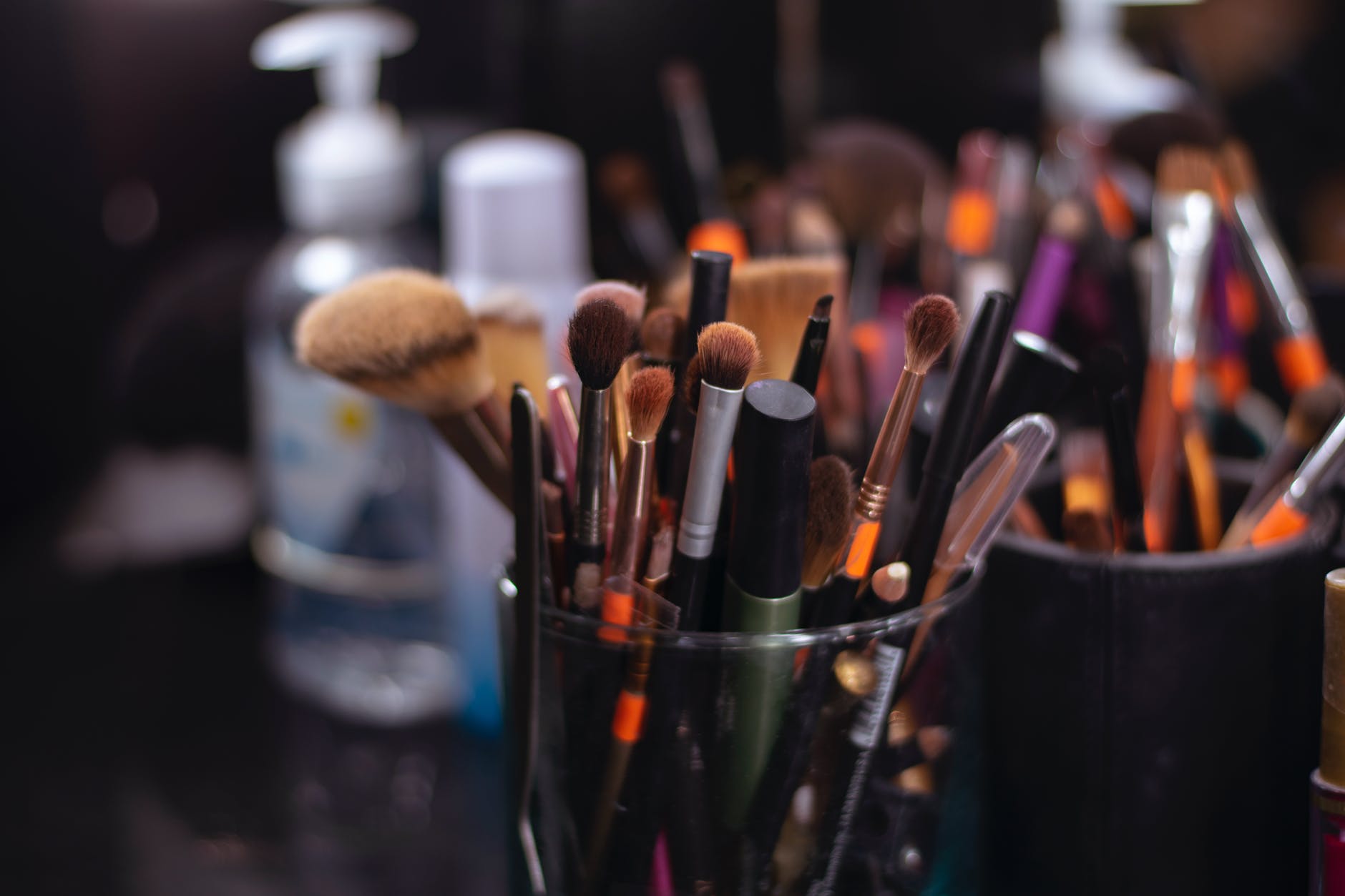

I’m pretty sure that I was in my forties before I went through a bottle of foundation. My make up routine was lipgloss and eye liner. I wore make up for special occasions. I used to have to throw it away because it dried up. And concealer? What the hell was that? I used to watch my girl, magically transform when we traveled together. She needed a whole extra thirty minutes to get ready to go out, but she would look amazing. Think she called it, “A beat, or beat up, beat down!” Don’t start me to lying. I didn’t need thirty because I’m not that skilled or experienced, but a good fifteen eventually became twenty-thirty on an average day! My how things have changed. And as it turns out, it might very well be time for things to change again!
Contrary to what you might think based on the title, this post is definitely not just about faces, but that’s where I’m starting. Awareness about the dangers of toxins we are exposed to on a daily basis has definitely been increasing. I’ve written a few posts about toxins and the necessity for detoxing. Many of us are finally becoming aware and concerned about what goes into our bodies and into our bloodstream.
For us women in particular, research has revealed that chemicals in our numerous skincare products can have some seriously adverse effects on hormonal balance. (As if periomenopause and menopause wasn’t enough!) I imagine this applies to men as well, although they probably use far fewer products than us ladies!
These chemicals enter our bloodstream through the skin. Remember, your skin is an organ and these chemicals are designed to penetrate your skin. AND, not only can they make you sick, they can disrupt your life in many ways including affecting your sleep, mood, and ability to focus.
Think of it like this, and I know it sounds totally crazy, but your skin eats and drinks too. (Whatever you put on it!) So, what are you feeding it? Chemical laden dyes, lotions, nail polish, make up? Dr. Kathyrn M Rexrode, Associate Professor of Medicine at Harvard Medical School points out that products are mostly tested for short-term issues like skin irritation, not long-term safety.
We go through great lengths these days to clean up our diet, but what we feed our skin matters too!
I highly recommend you check out the 2019 documentary Toxic Beauty directed by Phyllis Ellis. The film condenses a three-year investigation of unregulated chemicals in personal care products. The film’s opening scenes start with the story of Rosemarie Swift, a beauty industry icon whose work as a make up artist has been featured in Vogue, Harpers, and in ads for Calvin Klein, Ralph Lauren, Louis Vuitton and the list goes on and on. She is the founder of RMS Beauty. She speaks about falling ill and suffering from panic attacks, immune issues, memory loss, hormonal imbalances and rashes.
“The lab tech found high levels of numerous chemicals, and asked Rose-Marie if she worked in the cosmetic industry, which freaked her out; he said he saw a lot of people come to the lab with similar problems, all of whom did hair and makeup. So Rose-Marie detoxed her life.”
The chemicals in her hair blood and urine connected those dots. She launched beautytruth.com in 2004 to expose the industries ugliest ingredients. She went on to create the first truly organic cosmetic line which is now sold worldwide.
And unless you’ve been living under a rock, I’m sure you have heard about the huge lawsuit against Johnson & Johnson by about 15,000 women with cancer. Apparently a lifetime use of Talcum powder was linked to ovarian cancer. If you had kids back in the day, surely you remember putting J&J powder in your baby’s diaper! In 2019 the FDA detected evidence of asbestos in a product sample which was recalled, however they have still paid out billions in damages to plaintiffs.
Have you noticed the “Paraben Free” description on your shampoos and conditioners now? I can’t say I knew exactly what they were before I started researching clean living. I just knew when I started seeing Paraben-Free on packaging, whatever they were, they must be bad news. So, in case you are like me and don’t know what they are, they are preservatives used in a lot of skincare and haircare products to extend the shelf-life. (Not much different from food, huh?) Unfortunately, they act like estrogen and can mimic hormones, leading to hormonal imbalances and potentially hormone related cancers. (Like Breast Cancer!) Piling on products such as soaps, lotions, make-up like foundations, concealers and lipsticks can mean piling on harmful chemicals! (And for me, half that lipstick ends up in my mouth due to a lack of lips, so basically you can say I just eat it!)
Now for women of color, it gets worse!
“Black women have more uterine fibroids and more aggressive types of breast cancer. Anything that mimics estrogen should be avoided by women with these tumors.”
But wait. It gets even worse. More bad news from that article included the fact that 75% of products marketed directly to black women have ingredients that are toxic AND that “we” spend twice as much on skincare products as the general population. (I found that one hard to believe!) Research from *EWG (Environmental Working Group) shows that one in twelve beauty products marketed to black women contains toxic substances.
*EWG is a non profit and has a database with safety ratings for ingredients.
And while I’m talking to my sisters, let’s talk about relaxers. Hair straightening treatments apparently have high levels of carcinogens and toxins. A new study links the use a permanent hair dye and chemical straightener’s with a 60% increase in breast cancer risk for black women. “Hair straighteners” and relaxers are formulated with estrogen and placental hormones that can contribute to changes in the reproductive system says,” Kyla Taylor a health scientist at the National Institute of Environmental Health Sciences.
And, us older women have had more exposure since we have probably used these products for years. Think of all the lotions, PERMS, soaps, body wash, shampoo and conditioners you’ve used over the years. (And remember when there was just soap! Not body wash in plastic containers! Soap was wrapped in paper!) And if Jheri Curl juice was toxic, we are all screwed! But seriously, when exactly did we become too good for a bar of soap? I travel with a bar of soap now. One less liquid to squeeze into that zip lock bag! AND one less plastic container to pollute the earth!
My first thought after my daughters diagnosis was wondering whether or not her MS was related to exposure to chemicals. After all, she’s been exposed to chemicals for 22-23 years now! Another study published online December 3, 2019 by the International Journal of Cancer found a link between hair dye and breast cancer. The study also found breaking down the findings by race, an even higher risk for African-American women existed.
I swear, it seems we women have to choose between our health and trying to meet some standard of beauty. Tamarra James – Todd, Ph.D, Assistant Professor of Reproductive and Perinatal Epidemiology at Harvard stated similar findings for hair dye. “Some hair care products contain more than 5000 chemicals including some known to disrupt the body‘s natural hormone balance or to have cancer causing effects in animals. I quickly realized, while my daughter may be the one applying the color, I’m the one whose scalp is eating up that dye! Bad for us both!
“It may not be easy to let your hair go gray and to embrace your wrinkles, but it’s a cultural shift women should consider. Being healthy is beautiful and women should challenge the cultural standard of beauty. It’s about being comfortable with those changes and changing what’s acceptable,” says James- Todd.
I’m trying Tamarra! I’m trying!
Remember the Brazilian blowout company? I remember it was all the rage for a while in salons. Well, in 2011 FDA warned them that their hair straightening products contain dangerously high levels of the carcinogen formaldehyde. Meanwhile the label said the product was free of it! Lies! Just lies!
Although brands are also coming up with a range of natural skin and hair care products claiming to be “Natural” and “Paraben-Free, they often contain some other type of chemical(s). All is not lost. There really are some genuine options out there. It is important to note that with readymade products, there are bound to be some chemicals. Most moisturizers contain water and need some emulsifier to bind oils. Some preservatives are also necessary to sustain some shelf life.
One good source of products I stumbled across was:
https://www.thedetoxmarket.com
Another safe bet, AND BONUS, you can support black businesses is:
Black and Green is an all natural marketplace by all Black Artisans. Their carefully curated products are non toxic and quality tested. They also have a blog and podcast with some interesting articles.

Now for some good news! There are literally a thousand natural ingredients to rejuvenate your skin – luxurious nut-butters, vegetable oils, essential oils, beeswax, fruits, nuts, spices, and herbs. Yes! Kitchen ingredients –everyone will find something especially suited for their particular skin type.
So, feeling ambitious? Reduce your toxic burden by making some of your own skincare products. Craft your own creams, lotions, balms, lipsticks, face packs, hair packs, perfumes, hair styling gels, and other skincare products using natural oils and fruit-butters. I personally use coconut oil all over! But some skin types might not fare as well in terms of the face. Another all natural product I was gifted and love is K.Buggages’ Sweet Jamaica Cocoa Butter. (see below!) It is organic and smells amazing. I have the driest hands known to man. Even before Covid (OD on Hand Sanitizer) with cooking, I was constantly washing my hands or had them in water. Love what it does for my hands and elbows!
DIY skincare products are not only a safer option, but they offer plenty of long-term benefits that truly most brands can’t compete with. To begin with, you know what is in it! You can make highly personalized products instead of those one size fits all productions.
Most brands classify their creams and lotions as oily, normal, and dry skin types, which doesn’t always work. Requirements of our skin vary with seasons, hormonal changes, diet, water intake, stress, physical exercise, and many other factors. Moreover, many people do not fit into any of these criteria, but fall somewhere in between.
Making DIY creams and lotions using natural ingredients can also provide better nourishment for your skin. Natural oils are full of essential fats and vitamins that help replenish the skin of lost moisture and protect against environmental aging. Their antimicrobial and anti-inflammatory properties can keep acne problems at bay (adult acne is a big issue) and help minimize large pores. Nut-butters like shea butter, mango butter, cocoa butter, kokum butter, and oils like argan and rosehip are the most effective anti-aging creams you will ever find! Also, the best thing about DIY products is – you can always change them. If you think something is missing –you can always modify it.
The downside of DIY skincare: since you are not using preservative, these products will have a shorter shelf life. Try making small batches and putting in a little of vitamin E (a natural preservative), or by storing your creams in the refrigerator. In an ideal situation, if you are not using water, your creams should stay good for at least 8-10 weeks at room temperature. However, be sure to take the utmost care when preparing your creams, such as avoiding moisture, clean hands, and sanitizing your utensils and containers.
If you are interested, here are some DIY recipes to try. It is important to remember that everyone’s skin is different, and these recipes are only suggestive – to offer a starting point. Try combining different ingredients and feel free to experiment with other oils too.

My Black is Not Cracking – Body Butter
This can work as your everywhere butter – night cream, body lotion, hand cream, foot cream, face moisturizer, undereye cream, a lotion for lightening the underarm skin, a nail cream to protect your cuticles, hair moisturizer, a leave-on-conditioner, or as a lip balm.
Ingredients:
Shea butter: 1 ½ tablespoon
Cocoa butter: ½ tablespoon
Coconut oil: ¼ teaspoon
Argan oil: ½ teaspoon
Jojoba oil: ½ teaspoon
Vitamin E oil: ¼ teaspoon
Tea tree oil: 5 drops
Frankincense oil: 4 drops
Lavender oil: 4 drops
Note: Ingredients for this body butter can be as versatile as you like. You can replace cocoa butter with mango butter or add other kinds of butter or oils. Essential oils are optional and can also be replaced by other oils, depending on your preference and liking. However, keep the butter/oil ratio to a similar proportion for a creamy consistency.
Method of preparation:
Using the double boiler method, melt the butter and oils together. Be sure to keep the temperature on the lowest for this because high temperatures can negate many therapeutic properties of oils. Rapid melting is also not recommended for butters.
Add vitamin E oil, essential oils, and mix well. Pour the liquid in a clean glass jar.
Put the jar in the refrigerator. Rapid cooling is very important because letting the mixture cool at room temperature can result in a grainy butter.
Store the cream at room temperature. If you find it too greasy, melt again and add more butters.
My Black is Not Cracking – Anti-Aging / Anti-Crack Cream
This cream works best at night. You can also use it as a daily face moisturizer, hand cream, or as a scar healer.
Ingredients:
Mango butter: 2 tablespoon
Argan oil: 1 teaspoon
Rosehip oil: ¼ teaspoon
Almond oil: ¼ teaspoon
Rose essential oil: 5 drops
Carrot seed essential oil: 5 drops
Sandalwood oil: 2 drops
Method of preparation:
Same as above: melt oils and butter together in a double boiler.
Once melted, switch off the flame and add essential oils.
Pour in a glass jar and put it in the refrigerator for rapid cooling. Vitamin E is not needed for this cream as almond oil also works as a great preservative.

My Black is Not Cracking – Lip Service Lip Balm
Ingredients:
Grated beeswax: 1 teaspoon
Shea butter: ½ teaspoon
Jojoba oil: 1 teaspoon
Olive oil: ½ teaspoon
Castor oil: ½ teaspoon (optional, if you want gloss effect)
Essential oil: 4-5 drops
Choose any essential oil except tea tree oil. Orange, rose, lavender, jasmine oils smell heavenly.
Method of preparation:
Melt beeswax with oils and butter in a double boiler. Once melted, let the mixture cool and add essential oils. Pour into a container and let it solidify at room temperatur.

Honey Please
Did you know that honey not only draws in moisture, (humectant) but contains alpha-hydroxy acid which helps to even out skin tone. Raw honey also helps balance the bacteria on your skin, which makes it great for acne. I am fortunate that I no longer deal with very many skin breakouts, but I do enjoy a manuka honey mask (and in my tea). Manuka was been found to be very effective in speeding up your skin cells’ healing. Honey also has anti-aging benefits for those of us who are trying to prevent our black (or any other color skin) from cracking! I buy raw, unfiflterd honey, but I have also splurged on Manuka which costs a bit (Okay, a lot) more.
Try using it as a cleaner. Wet your face with warm water. Massage some honey all over your face as you would any other cleanser.
https://pubmed.ncbi.nlm.nih.gov/24305429
This study cites that the use of honey retards wrinkle formation.
A 2017 study on the honey of the stingless bee found that the raw honey has a strong anti-inflammatory effect. Another review of studies supports this, finding that most honey varieties have anti-inflammatory properties.
It is important to do a patch test first. A person should apply a small amount of honey to a tiny area of the skin and wait for at least 20-30 minutes. If the skin becomes irritated, do not use! When using honey on your skin you can also mix it with other ingredients.
Studies show that raw honey contains pollen and bee propolis. According to a 2015 review, bee pollen contains a few helpful properties. It can have a pain-relieving, anti-inflammatory, and antibacterial effects. However, it is important to note that pasteurization removes both pollen and propolis from the honey.which may reduce its antioxidant effects. In addition, processed honey may contain additives and sweeteners.
ANYONE allergic to honey should not use honey on their skin. People with allergies to pollen or bees should also avoid applying honey topically. For people without known allergies, it is still important to test a small part of the skin before applying honey to larger areas of the body.
Finally, since it is highly unlikely that we will all start making our own products, the moral of the story is stay informed. We are all going to use products and wear some make up even if only for special occasions. I have definitely started giving my skin a break. I have been pleasantly surprised to see that there seems to be a move toward more natural and fresh faces. It was refreshing during this Covid crisis to see bare faced women show their true selves! If you’re not quite there yet, do this. Take an inventory and check your ingredients. Less is more and just because it says natural and botanical, doesn’t mean it is! Do your homework. And don’t forget to check out EWG which is a non profit and has a database with safety ratings for ingredients. Another suggestion is to consider European manufacturers that ban many ingredients allowed in the US products. I read in one of the gazillion articles I used as research that as many as 1000-1300 ingredients are banned in Europe compared to about a dozen banned in the US! Insert big-eyed emoji, and maybe the praying hands and then maybe that red face that looks pissed! If the Government isn’t going to look out for us (definitely not this administration!) we will have to look out for ourselves.
Beauty is NOT only skin deep!

Email KBuggage1@gmailcom

JC Amour Hair Oil Available at http://www.jjeanclaude.com
https://www.health.harvard.edu/womens-health/toxic-beauty
Hey Kavon,
Have you ever thought dedicating an entire post on eczema? It’s seems I’ve developed a case late in life and it normally occurs, for a short period, when the 4 seasons change. I’ve learned that asthma and eczema usually occur hand in hand. Needless to say, the asthma symptoms began just before the eczema. I make my own deodorant, use coconut and Argan oils with coco or shea butter and essential oils on my skin.
Thanks for your comment. Yes, I have actually considered this recently. I suffered myself when I was much younger, and again later which coincided with a stressful period, but also when I moved to a house where mold and mildew were an issue. My Granddaughter suffers and ironically in the same areas that I did when I was young. The short answer is yes! I have been researching ways to help her. It was once only on her arms, but now that it is affecting her face, it has become a priority! What bothers her, bothers Mom Mom! So, look for that post soon!